Snake plants are one of the most popular houseplants. They are tough and easy to care for. But many plant owners worry about one thing. Do Snake Plants Attract Bugs?
This is a common question. Let’s explore this question in detail and learn how to keep your plant healthy.
Do Snake Plants Really Attract Bugs?
Snake plants do not naturally attract bugs. These plants have thick, waxy leaves. They contain natural compounds that many insects dislike. This makes them less appealing than softer plants.
However, problems can still happen. When care conditions are poor, bugs may appear. The plant itself is not the issue. Instead, the environment around it creates problems. Overwatered soil, poor air flow, and dust buildup all invite unwanted guests.
A healthy snake plant indoors actually helps create cleaner air. This can reduce conditions that some pests prefer. The key is maintaining proper care habits.
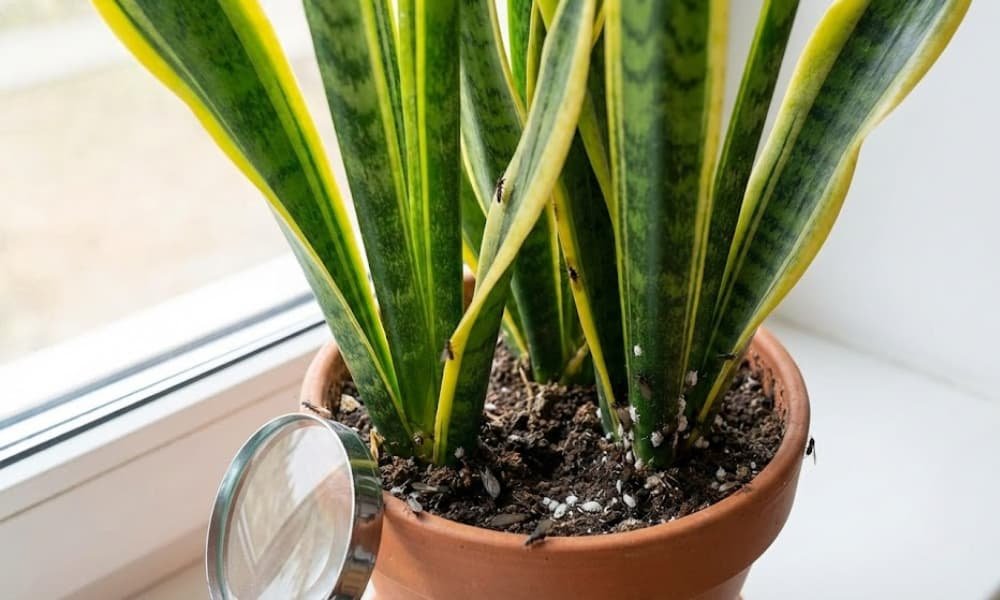
Common Bugs Found on Snake Plants
Even though snake plants are naturally resistant, certain pests can still cause trouble. Here are the most common ones you might encounter.
Spider Mites
Spider mites are very small pests. They live on the undersides of leaves. You might see tiny webs or small dots moving around. These pests suck plant juices from leaves.
The damage appears as yellow spots or speckled leaves. In severe cases, leaves may wilt. Spider mites love dry conditions. They multiply quickly when the humidity is low.
Mealybugs
Mealybugs look like tiny cotton balls. They gather in clusters on leaves and stems. These pests leave a sticky residue behind. This substance can attract other problems, like mold.
Mealybugs drain nutrients from your plant. They cause leaves to turn yellow and drop. If you spot white, fuzzy masses, you likely have mealybugs.
Fungus Gnats
Fungus gnats are small black flies. They hover around your plant and soil. The adults are annoying but mostly harmless. The real problem is their larvae.
Tiny bugs in snake plant soil are often fungus gnat larvae. These feed on organic matter and roots. They appear when the soil stays too wet for too long. Proper watering prevents most fungus gnat issues.
Scale Insects
Scale insects look like small brown bumps. They attach firmly to leaves and stems. These pests have a hard shell that protects them. They also suck sap from the plant.
Scale damage causes yellowing and stunted growth. The sticky honeydew they produce attracts ants. These insects can be stubborn to remove once established.
Reasons Bugs Might Appear
Understanding why pests appear helps you prevent them. Several factors can create an environment where bugs thrive.
Overwatering is the biggest problem. Snake plants prefer dry soil between waterings. When soil stays constantly moist, it attracts fungus gnats. Root rot can also develop. This weakens your plant and makes it vulnerable.
Poor air circulation creates issues. Stagnant air allows pests to settle in comfortably. Plants crowded together have less airflow. This creates perfect conditions for spider mites and other bugs.
Dust accumulation matters more than you think. When dust covers leaves, it blocks light. This weakens the plant. Dusty leaves also attract mealybugs. Regular cleaning prevents this problem.
High humidity can be troublesome. While snake plants tolerate various conditions, high humidity for snake plant care can encourage pests. This is especially true in spaces with poor ventilation.
Stressed plants are easy targets. Plants in the wrong lighting or temperature conditions become weak. Bugs take advantage of vulnerable plants. They settle in and multiply rapidly.
Read Also: How Fast Do Snake Plants Grow?
How to Prevent Bugs on Snake Plants
Prevention is always easier than treatment. These simple steps keep your snake plant healthy and pest-free.
Water correctly every time. Let soil dry completely between waterings. Check the soil with your finger before adding water. In winter, water even less frequently. This single habit prevents most bug problems.
Clean leaves regularly with a damp cloth. This removes dust and potential pest eggs. Wipe both sides of each leaf gently. Do this monthly for best results.
Ensure good air circulation around plants. Don’t crowd them together. A small fan can help if needed. Fresh air movement discourages many pests from settling.
Inspect new plants before bringing them home. Check leaves, stems, and soil carefully. Quarantine new plants for two weeks. This prevents spreading pests to healthy plants.
Use well-draining soil always. Snake plants need loose, aerated soil. Add perlite or sand if needed. Good drainage prevents water-related pest issues.
Keep appropriate spacing between plants. Give each plant room to breathe. This improves air flow significantly. It also makes inspections easier.
With proper care, a snake plant’s lifespan can range from 8 to 10 years or even longer, making it a long-lasting addition to your home interior.
Read Also: Why Do They Call it Snake Plant?
Frequently Asked Questions
What bugs do Snake Plants attract?
Snake plants don’t naturally attract bugs. However, poor care conditions can invite spider mites, mealybugs, fungus gnats, and scale insects to appear on these plants.
What is the disadvantage of Snake Plants?
Snake plants can develop root rot from overwatering. They’re toxic to pets if ingested. These plants also grow slowly and need minimal water or attention.
How do I keep bugs out of my snake plant?
Water only when soil is completely dry. Clean leaves monthly with a damp cloth. Ensure good air circulation around your plant to prevent bug infestations effectively.
Where can I buy a snake plant?
Snake plants are available at local nurseries, home improvement stores, garden centers, and online plant retailers. Many grocery stores also carry these popular indoor plants.
What is the best plant to keep bugs away?
Lavender, marigolds, basil, and mint are excellent bug-repelling plants. Citronella grass and rosemary also naturally deter mosquitoes and other flying insects from nearby areas.
Can snake plants survive in low light conditions?
Yes, snake plants tolerate low light well. However, they grow better and faster in bright indirect light. Very low light may slow growth significantly over time.
Final Words
So, Do Snake Plants Attract Bugs? The answer is no, not naturally. These hardy plants have natural defenses against many pests. Problems usually happen because of poor care conditions, not the plant itself.
Proper watering is your best defense. Keep soil on the dry side. Provide good air circulation. Clean leaves regularly. These simple steps prevent most bug issues.
If pests do appear, act quickly. Natural treatments work well for snake plants. With proper attention, your plant will stay healthy and beautiful for years. Remember that prevention is always easier than a cure.
Snake plants are excellent choices for beginners. They forgive many mistakes. Just avoid overwatering and watch for early signs of trouble. Your snake plant will reward you with years of easy, low-maintenance beauty.