Multigenerational living used to be framed as a fallback. A temporary arrangement. Something people explained away with phrases like “just for a year” or “until things settle.”
That framing no longer fits.
By 2026, multigenerational households are shaping how homes are designed, renovated, and managed. Not as a niche trend. As a mainstream response to cost pressures, aging parents, adult children returning home, remote work, and the quiet realization that sharing space can be practical without feeling crowded.
The homes changing fastest are not the luxury showpieces. They are normal houses. Suburban properties. Urban infill lots. Places that need to work harder than they used to.
Why multigenerational living is no longer optional planning
According to the Pew Research Center, nearly 1 in 5 Americans now live in a multigenerational household. That number has been climbing steadily for years, and the reasons are layered.
Housing affordability is the obvious one. But it is not the only one.
Parents are living longer and staying independent longer. Adult children are delaying homeownership. Remote work has blurred the line between “extra space” and “necessary space.” Childcare costs have quietly pushed families back together. Sometimes by choice. Sometimes by math.
What has changed most is not who is living together, but how intentional the living arrangement has become.
People are no longer just squeezing extra beds into spare rooms. They are redesigning entire properties around privacy, autonomy, and flexibility. That shift shows up clearly in how homes are built and remodeled heading into 2026.
ADUs are no longer a bonus feature
Accessory Dwelling Units used to be marketed as income generators. Backyard cottages. Garage apartments. Guesthouses that could maybe pay for themselves someday.
Now they are something else entirely.
In many households, the ADU is the plan. A place for parents who want independence without isolation. A landing spot for adult children who are not ready to commit to a mortgage. A flexible unit that can change roles every few years without forcing a move.
Cities have noticed. Zoning rules continue to loosen in many markets. Financing options have improved, slowly but noticeably. Builders are designing ADUs that feel permanent, not improvised.
What makes ADUs work in multigenerational settings is not just the extra square footage. It is the psychological separation. A separate entrance. A small kitchen. A sense of ownership over one’s own space.
That separation matters more than most people expect.
Floor plans are becoming less polite
Traditional home layouts assumed everyone wanted to be near each other all the time. Open concepts. Shared everything. One main living zone meant to bring people together.
Multigenerational households have challenged that idea.
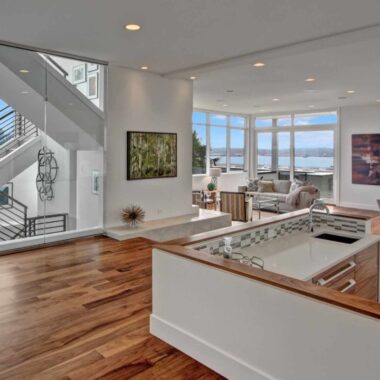
Homes built or remodeled for 2026 look different inside. More doors. More defined zones. Sometimes a second living room that is not meant for guests. Sound buffering becomes a design priority, even if no one says it out loud.
Bedrooms are spaced farther apart when possible. Bathrooms are duplicated rather than shared. Staircases become dividers, not just connectors.
The goal is not separation. It is relief.
Privacy has become the currency of successful shared living. Without it, even the best intentions wear thin.
Kitchens are splitting into layers
One of the quieter shifts in multigenerational design shows up in kitchens.
There is still a main kitchen. That has not changed. But increasingly, homes include secondary prep spaces. Mini kitchens. Basement kitchenettes. Even just a sink, microwave, and fridge tucked away from the main hub.
These additions reduce friction more than any open floor plan ever did.
Late dinners do not disrupt early mornings. Different eating habits coexist. Small routines stay small.
This trend shows up clearly in renovations, especially when families are planning to stay long term. It is less about luxury and more about letting daily life unfold without negotiation.
Bathrooms are becoming more strategic
No one loves talking about bathrooms. But in multigenerational homes, they matter.
Designers are adding more half baths. More ensuite layouts. More barrier-free showers that work for aging parents now and future buyers later.
Universal design features are showing up quietly. Wider doorways. Curbless showers. Lever handles instead of knobs. Not because residents see themselves as old, but because planning ahead costs less than retrofitting later.
This kind of foresight is often where experienced property managers add value. They have seen what works long term and what becomes a maintenance headache five years in. That perspective tends to save money and stress, even if it feels overly cautious at first.
Outdoor space is being rethought
Yards used to be decorative. Lawns to mow. Patios to stage.
In multigenerational homes, outdoor space is functional.
Separate seating areas. Clear paths that do not cut through someone else’s routine. Lighting that supports safety without turning the backyard into a stadium.
ADUs often rely on outdoor space to feel larger than they are. Thoughtful landscaping helps define boundaries without fencing people off emotionally.
Some families even design outdoor areas as neutral ground. A place where generations overlap naturally, not by obligation.
Property management plays a quieter role than expected
Multigenerational living blurs traditional ownership and tenancy lines. Sometimes parents contribute financially. Sometimes adult children pay informal rent. Sometimes an ADU shifts between family use and rental use over time.
This is where experienced property managers become quietly useful.
They help navigate local regulations. They help structure agreements that feel fair without becoming awkward. They understand how to maintain shared systems when multiple households rely on them.
Groups like Beacon Property Management often see these arrangements up close, long before they become widely discussed trends. Their on-the-ground experience helps families avoid common missteps, especially when flexibility is part of the plan.
The role is not about control. It is about foresight.
Skepticism is healthy and necessary
Multigenerational living is not a universal solution. It does not work for every family. Proximity can magnify tension as easily as it can create support.
That reality should not be ignored.
What has changed is the willingness to design for complexity instead of pretending it will not exist. Homes are no longer expected to serve a single life stage. They are expected to adapt.
Some households will love the closeness. Others will rely heavily on thoughtful design to make it tolerable. Both outcomes are valid.
This nuanced view aligns with broader housing trend forecasts, including those discussed in this piece on the future of real estate trends and predictions. Flexibility is no longer optional. It is built into the market’s expectations.
What buyers and owners should think about now
Planning for multigenerational living in 2026 does not require committing to it forever. It requires leaving doors open.
Buyers should ask whether a home could adapt, even if it does not need to today. Owners considering renovations should think beyond immediate needs.
Does the layout allow separation if needed later? Could a basement become livable without major disruption? Would an ADU add long term value even if it starts as family space?
These are not design questions alone. They are lifestyle questions. Financial questions. Sometimes emotional ones.
Property managers are often brought in after decisions are made. Increasingly, they are most helpful before plans are finalized.
A quieter future for shared living
Multigenerational homes in 2026 are not louder. They are calmer. Better buffered. More forgiving.
The design trends reflect a simple truth. People want connection without friction. Support without sacrifice. Space that adapts without forcing constant compromise.
That balance is difficult. But it is increasingly achievable with the right planning.
If multigenerational living is on the horizon, or even just a possibility worth preparing for, we would welcome the conversation.
Sometimes the best design decision is simply thinking a few years ahead.