Your bathroom or kitchen sink looks old and worn out. The finish has chips and stains that won’t come off. You might think buying a new sink is the only option. But wait! Painting your sink can save you money and give your space a fresh look.
Why Paint Your Sink?
Replacing a sink costs a lot of money. You need to pay for the new sink, plus installation fees. Painting offers a budget-friendly alternative that anyone can do at home. Your old sink can look brand new again with just a few supplies and some patience.
Many people ask, “Can You Paint a Sink?” The answer is yes! With the right products and steps, you can transform that ugly fixture into something you’re proud to show off.
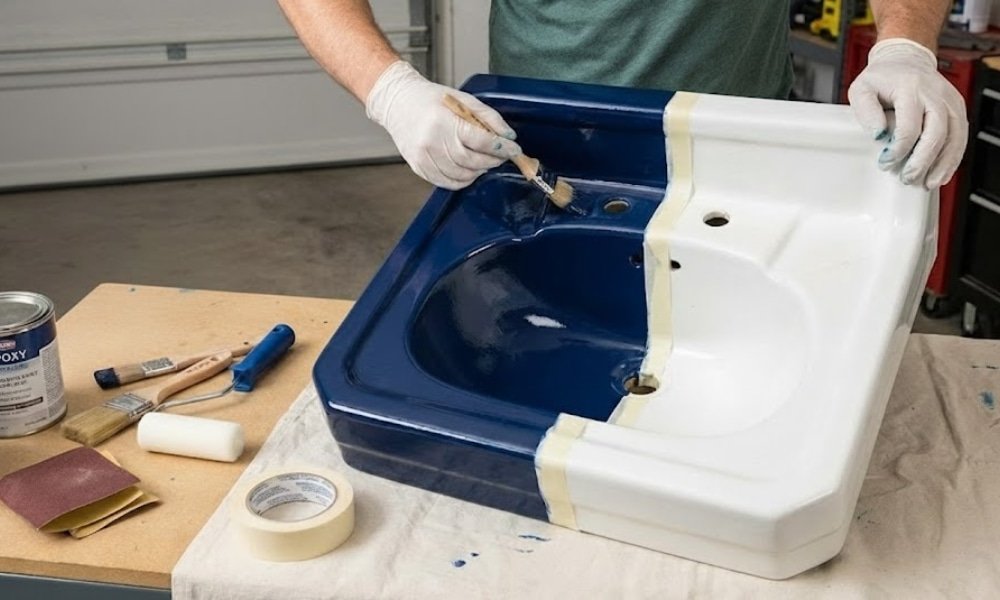
What You Need to Get Started?
Before you begin, gather all your supplies. Here’s what you’ll need:
- Fine-grit sandpaper (220-grit works well)
- Strong cleaner or degreaser
- Bonding primer for slick surfaces
- Epoxy-based paint
- Foam roller and small brush
- Painter’s tape
- Plastic sheets for protection
- Clean cloths
Don’t use regular wall paint because it won’t hold up to water and daily use.
The best paint for kitchen sink projects is epoxy-based paint. This type creates a hard, waterproof surface that can handle constant moisture and scrubbing. You can find it at most hardware stores.
Preparing Your Sink
Preparation makes or breaks your painting project. Follow these steps carefully:
Step 1: Clean Thoroughly: Start by cleaning the sink with a strong cleaner to remove soap scum, grease, and dirt. Let it dry completely.
Step 2: Sand the Surface: Sand the entire surface with fine-grit sandpaper. This creates tiny scratches that help the paint stick better. Wipe away all the dust with a damp cloth and let everything dry again.
Step 3: Protect the Area: Remove the faucet and drain if possible. Cover them with painter’s tape if you can’t take them off. Protect the surrounding countertop and walls with plastic sheets and tape.
The Painting Process
Apply a bonding primer first. This special primer helps paint stick to slick surfaces like porcelain or ceramic. Let it dry according to the package directions.
When you paint a sink bowl, use thin, even coats instead of one thick layer. Thick paint drips and creates an uneven finish. Apply the first coat and wait for it to dry completely before adding the next one.
Most projects need at least two or three coats. Some people apply up to five coats for maximum durability. Be patient between coats. Rushing this step ruins all your hard work.
Use a small foam roller for large, flat areas and a brush for corners and edges. This combination gives you the smoothest finish possible.
Drying and Curing Time
Here’s where patience really matters. The paint might feel dry to the touch after a few hours, but it’s not ready for use yet. Most paints need 24 to 48 hours to dry properly.
After drying, the paint still needs time to cure. Curing means the paint hardens completely and becomes waterproof. This process takes three to seven days, depending on the product you used.
Don’t use your sink during the curing period. I know it’s hard, but using it too soon will damage your new finish. Find another sink in your home for those few days.
Making Your Paint Job Last
Once your sink is ready, follow these care tips:
- Use gentle cleaners and soft cloths only
- Avoid harsh scrubbing pads and steel wool
- Skip strong chemical cleaners
- Wipe the sink dry after each use when possible
- Don’t let standing water sit for long periods
According to Interiors Land, proper maintenance keeps your painted sink looking great for years. Small scratches can happen, but you can touch them up easily with leftover paint.
Common Mistakes to Avoid
Watch out for these errors that ruin paint jobs:
Skipping Preparation: Skipping the cleaning and sanding steps is the biggest mistake people make. Paint won’t stick properly to dirty or smooth surfaces. Take your time with preparation.
Using Wrong Paint: Using the wrong type of paint is another common error. Regular paint peels off quickly when exposed to water. Always buy paint specifically designed for bathrooms and kitchens.
Bad Timing: Applying paint in humid conditions causes problems too. Paint needs proper air circulation and moderate temperatures to dry correctly. Pick a day with good weather.
Read Also: How to Reupholster a Dining Room Chair?
Frequently Asked Questions
What kind of paint do you use on a sink?
Use epoxy-based paint designed for high-moisture areas. This specialized paint creates a durable, waterproof finish that withstands daily use, scrubbing, and constant water exposure better than regular paint.
Do painted sinks last?
Yes, painted sinks typically last three to five years with proper care. The longevity depends on preparation quality, paint type, usage frequency, and maintenance. Gentle cleaning extends the finish significantly.
Can you paint a sink without sanding?
Technically yes, but sanding dramatically improves paint adhesion and longevity. Skipping this step often leads to peeling and chipping within months. Proper sanding ensures your investment lasts longer.
How long before you can use a painted sink?
Wait at least 24 hours for drying, then allow three to seven days for complete curing before regular use. Using the sink too early damages the finish permanently and wastes effort.
Can you paint a stainless steel sink?
Yes, stainless steel sinks can be painted using specialized metal primers and epoxy paint. The surface requires thorough cleaning and light sanding for proper paint adhesion and lasting results.
What colors work best for painted sinks?
White and light colors remain most popular because they hide water spots and match various décor styles. However, bold colors like black, navy, or gray create stunning focal points.
Final Thoughts
Painting a sink is a practical way to refresh a kitchen or bathroom. It saves money and time while improving appearance.
With the right prep, patience and products, you can get a clean, modern look again. Many people ask, “Can You Paint a Sink?” and the answer is yes when done correctly.